
US Congress: Sufficiently Fund Public Housing
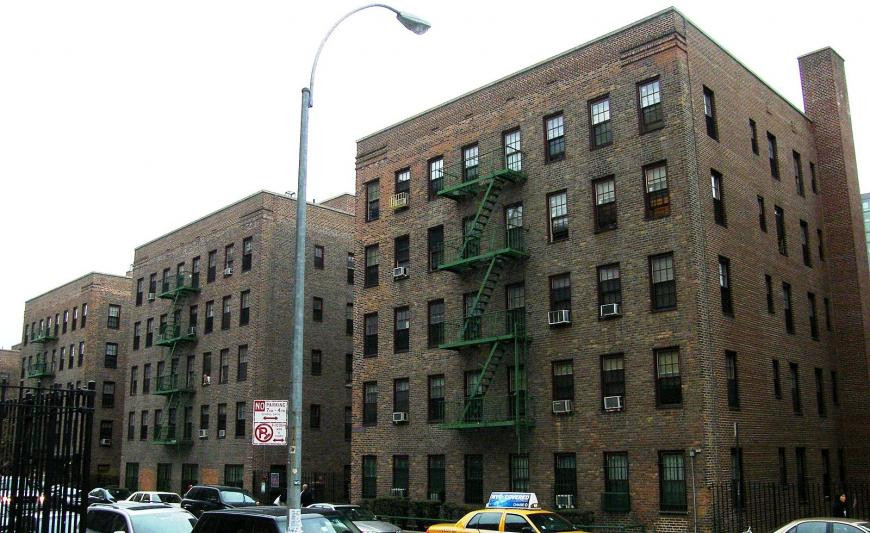
Human Rights Watch has called upon the United States Congress to allocate adequate funding to address the mounting backlog of repairs in local public housing authorities. In a letter addressed to the US Senate Committee on Banking, Housing, and Urban Affairs, and the US House Committee on Financial Services, the organization emphasized the critical role of public housing in upholding the right to affordable housing, particularly for marginalized groups, including women, people with disabilities, and Black, Indigenous, and people of color. Public housing has suffered from insufficient funding for many years, despite Congress approving a $3.5 trillion budget resolution, which includes $339 billion for housing programs. However, how this allocation will be utilized remains undetermined.
The $3.5 trillion budget resolution presents a crucial opportunity to rectify the consequences of the federal government's prolonged neglect of public housing. Human Rights Watch asserts that Congress should act to safeguard the human rights of nearly two million individuals dependent on public housing in the US.
Public housing offers essential housing stability for low-income tenants, as rents are limited to 30 percent of household income, and residents are afforded various protections against eviction. Nevertheless, funding for major repairs has decreased by approximately 35 percent, adjusting for inflation, in comparison to 2000. This has resulted in a significant gap between the availability of public housing and the actual demand, with residents witnessing the deterioration of their homes, jeopardizing their right to adequate housing. Each year, as many as 15,000 public housing units are either closed or demolished due to their uninhabitable condition.
Rather than allocating sufficient funding, Congress has introduced new programs that divert housing from the traditional public housing system. One such program is the Rental Assistance Demonstration (RAD), where local public housing authorities transfer or lease their developments to private companies to secure financing for repairs. However, Human Rights Watch's research into this program in New York City revealed reduced oversight and protections for residents and, in some cases, increased eviction rates. The program's impact on housing quality remains uncertain, as some residents in New York City's converted housing have reported ongoing habitability issues.
Increasing funding for public housing would signify a renewed commitment to the original purpose of the program: providing safe, quality, and affordable housing for all. By reinvesting in public housing, the aim is to ensure that individuals no longer have to choose between unaffordable or uninhabitable housing options.
Related Reporting

Official Statement & Open Appeal
West Support issues an official appeal to Poland's President Karol Nawrocki, calling for an end to systemic impunity for hate crimes against Ukrainian nationals and Eastern Christian communities in Poland.

West Support Publishes New Research on Identifying International Armed Conflict
Our team has published peer-reviewed legal research in the Brooklyn Journal of International Law, proposing a new definition for identifying an international armed conflict.

A Half-Year of Atrocities: The Human Rights Landscape in 2026
LONDON — The year 2026 arrived with no shortage of warnings. Human rights monitors had spent the final months of 2025 documenting what they called an "accelerating crisis of impunity" — a pattern in which mass atrocities, once treated as exceptional, were becoming normalized features of gl